Backyard Drainage London, Ontario: 10 Common Mistakes and How to Avoid Them
Backyard drainage around London, Ontario asks you to design for four seasons, not just a single heavy rain. The city sits on clay and clay-loam soils across much of the Thames watershed, which means slow percolation when the ground is wet and frost that heaves in winter. The result is a yard that can look fine by mid-July, then turn into a sponge in April or stay slick and puddled after every thunderstorm. Good drainage is boring when it works, but it is costly and disruptive when it fails.
I have spent years walking backyards in Old North, Byron, and new subdivisions south of the 401, diagnosing puddles, soggy side yards, and flooded window wells. The patterns repeat. Below are the ten mistakes I see most often in backyard drainage in London, Ontario, followed by practical ways to avoid them. Along the way I will reference options such as french drains, swales, catch basins, and the connection points that are legal here. I will also touch on when to call qualified drainage contractors London Ontario homeowners trust, and when a homeowner with patience and a good shovel can manage it.
Why backyard drainage in London behaves differently
Before we dig into mistakes, it helps to understand the local conditions that quietly drive outcomes. Much of London developed on clay till, which is dense and slow to drain. The city gets a wide range of precipitation across the year, roughly 900 to 1,000 millimetres when you include snow. Spring thaws load the soil with water when vegetation is not pulling moisture back out. Add compaction from construction traffic in newer subdivisions, and water ends up riding across the surface rather than soaking in.
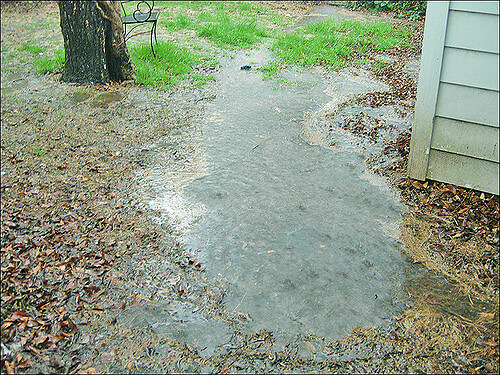
There is also the regulatory side. Many storm sewers are separated from sanitary sewers. It is illegal to tie a yard drain or sump discharge into a sanitary line, and inspectors do check. Newer homes have lot grading plans showing where water must go. Changing grades without thinking can push water onto a neighbour and land you in a dispute.
With that context, let us go mistake by mistake.
Mistake 1: Thinking the problem is only where the puddle appears
A backyard pool under the maple looks like the culprit. Often it is only the symptom. Water on the surface usually begins within a few metres of a wall or downspout, then migrates to the lowest pocket. I once assessed a yard in Westmount where a side-yard puddle showed up after every storm. The owner had installed a small catch basin right in the wet spot. The real issue sat 9 metres upslope where two downspouts dumped into a narrow corridor that sloped back toward the house.
Avoid this by starting at the top of the drainage path. Walk the lot during or right after a good rain, and again a day later. Watch where water starts and how it slows. Look at downspouts, AC pads, the slope around the foundation, and paths where lawn turns to clay. Solve those and your low spot often dries up on its own, or at least needs a smaller intervention.
Mistake 2: Ignoring downspouts and roof water
Roof area adds up. On a typical 2,000 square foot house with a 5-in-12 roof, you are shedding tens of thousands of litres per heavy storm. If downspouts discharge within a metre of the foundation onto compacted soil, water sits against the wall. You will see damp basement corners, sump pumps cycling more often, and window wells that hold water.
Downspout extensions are the simplest fix, yet they are often missing or too short. I prefer rigid, smooth-wall extensions that carry water 3 to 4 metres away if the lot allows. When the yard is flat, tie the downspouts into a shallow swale or a properly built french drain that runs to a legal discharge point. Avoid splash pads alone on clay. They are decorative, not functional, on a saturated lawn.
Mistake 3: Misunderstanding grading and expecting miracles from sod
Healthy drainage starts with the grade against the house. Aim for a consistent fall away from the foundation, about 2 percent for the first 2 metres. That is roughly 25 millimetres per linear metre, or 2 centimetres per metre if you like round numbers. People often add beautiful topsoil and sod against the wall, only to see it settle hard within a season, sometimes by 20 to 50 millimetres. Suddenly water runs back toward the foundation again.
Topsoil does not belong at the bottom of a grade correction. Pack https://franciscoahkr792.image-perth.org/eco-friendly-basement-waterproofing-options-in-london-ontario structural fill or compacted clay to establish the slope first, then cap with 100 to 150 millimetres of topsoil and sod. In narrow side yards, consider a shallow concrete or paver strip with a micro slope that directs water forward to the front swale. It is a low-maintenance way to keep soil off the wall and preserve slope after you finish planting.
Mistake 4: Installing french drains the wrong way
Homeowners hear about french drains and picture an all-purpose fix. Done well, they work. Done poorly, they clog within a season. The typical backyard drain in London uses a 100 millimetre perforated pipe, clear 19 millimetre angular stone, and a non-woven geotextile wrap. The trench should be at least 300 millimetres wide and 450 to 600 millimetres deep, with the pipe placed low in the trench and surrounded by stone, not just sprinkled with it.
A few critical points from jobs I have revisited years later:
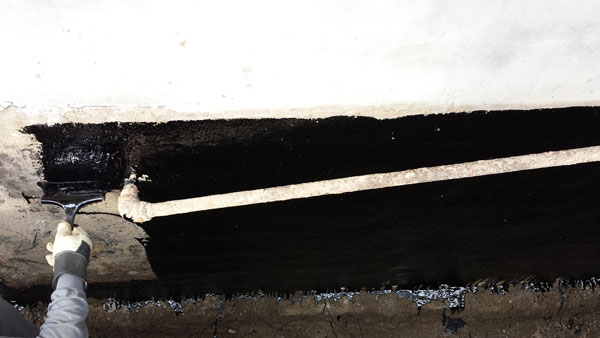
- Use non-woven geotextile to wrap the stone completely. Filter socks over the pipe alone are not enough in clay. Fine particles will migrate into the stone bed unless the entire aggregate is wrapped.
- Choose clean, angular stone. Pea gravel looks nice but it locks up and slows flow. Crushed clear stone forms stable voids for water to move.
- Maintain continuous slope in the pipe. Half a percent to one percent is a realistic target in most backyards. That is 5 to 10 millimetres per metre. Set string lines and verify as you work. Wavy pipes create sags that trap water and freeze.
- Include cleanouts. A vertical standpipe with a cap at strategic points, like at changes in direction or every 15 to 20 metres, lets you flush the system when roots or fines accumulate.
People ask about depth. You do not need to install perforated pipe below frost. This is not a water supply line. Freezing is not an issue inside the stone bed because water dissipates. What does freeze is a shallow solid outlet line to a pop-up emitter. Protect that outlet or choose a discharge that tolerates winter.
Mistake 5: Confusing weeping tiles with yard drains
Weeping tiles London Ontario homeowners talk about serve a specific purpose. They control groundwater around the foundation, usually at the footing level, leading to a sump or storm connection. They are not a remedy for a soggy lawn. Tying a backyard trench drain into a foundation weeping tile invites yard water to load your sump pit, overwork the pump, and potentially bring surface fines to your footing system.
Keep systems separate. A backyard french drain should lead to a legal discharge point independent of your weeping tile. Options include a rear yard catch basin tied to a storm lateral, a swale that daylights to the front, or a dry well if soil conditions support it. If you suspect your weeping tile is failing, that is a foundation-specific project that may involve excavation to footing depth or an interior retrofit, not part of routine yard drainage.
Mistake 6: No plan for where the water goes
Every metre of perforated pipe you install gathers water. It must go somewhere that works in every season. Daylighting to a slope that leads off property can be fine, as long as you do not ice a walkway in February or send water to a neighbour. Pop-up emitters sitting flush in turf are common in retail kits. They look tidy and they clog with cut grass, then freeze in fall. A buried line to a storm sewer inlet is ideal where available, but it requires proper elevation, a permit, and work to city standards.
I measure outlet elevation before I start a trench. If I cannot achieve positive slope from the wet zone to the discharge within the trench depth I am comfortable with, I rethink the design. Sometimes the right move is a shallow swale that nudges water to the front lot line, not a deep pipe that dead ends. Other times a small sump basin and a secondary pump make sense at a low corner that simply has no gravity route. Pumps introduce maintenance, so use them only when the grade says you must.
Mistake 7: Underestimating compaction and surface flow paths
Infill builds and pool installations often leave tyre tracks that settle into subtle ruts. A yard can have the right overall slope and still trap water because of slight lips at fence lines, raised landscaping beds, or a patio edge poured without a thought for flow. In one Oakridge yard, three properties met at a back corner. Each owner had added a bit of soil to their side. Over time a small crest formed exactly at the property junction, forcing water to sit in all three yards.
Stand back and read the surface like a shallow river. If a fence blocks flow, consider a small under-fence gap with a paver bridge, or a corrugated culvert sleeve set below the pickets. Where patios meet lawn, grind or re-lay the edge stones so the surface grade continues without a lip. Swales do not need to be dramatic. A 300 millimetre wide trough with a 2 to 3 percent centerline fall carries water quietly, hidden in plain sight once the grass re-establishes.
Mistake 8: Skipping utility locates and permits
Shovels and augers hit more than dirt. Cable, gas, and fibre sit surprisingly shallow in some backyards. Ontario One Call provides free locates, and it is a legal requirement before you dig. Miss this step, and you risk injury and significant repair bills. Beyond utilities, tying anything to a municipal storm line needs approval, and older areas may not have a convenient storm lateral at all.
There are also lot grading certificates in many subdivisions. They dictate where swales run and at what elevations. Altering them without a plan can trigger compliance issues when you sell or if a neighbour complains that your changes flooded their side yard. I tell homeowners to collect the original grading plan if they can, then sketch proposed changes over it. A reputable contractor will do the same and can coordinate with the city when a connection or change is involved.
Mistake 9: Using the wrong materials to save a few dollars
Materials matter more than people assume. I see black corrugated pipe crushed under driveway crossings or kinked under shallow cover. It is fine for short, non-load-bearing runs, but under traffic or shallow cover, a rigid PVC SDR 35 or equivalent pipe holds its grade and stays open. For catch basins, a quality unit with a deep sump lets sediment drop out before it enters your pipe. Cheap plastic grates break under a wheelbarrow, then turf grows into the opening and you lose the basin entirely.
Fabric quality shows up over time. Non-woven geotextile rated for drainage resists clogging but still lets water move. Landscape fabric marketed for weed control can choke a trench because it is designed to block, not filter. Stone size also affects longevity. Stick with clear, angular stone in the 19 millimetre range. Fines or limestone screenings lock together and limit flow within months.
Mistake 10: Building for summer and forgetting winter
London winters test backyard drainage. Freeze-thaw cycles turn small depressions into skating rinks. A sump discharge onto a north-facing lawn can glaze a sidewalk. Pop-up emitters freeze shut. Outlets at the curb can get buried by plow windrows.
Plan for winter from the start. Put discharge points where sun reaches them. If you must cross a walkway, sleeve the pipe under it so meltwater does not run over concrete. For sumps, use a rigid extension and a tip-up winter bypass that lets water run across a gravel bed away from living areas. If your drainage relies on a lawn depression, reinforce that swale with a strip of river stone or a turf reinforcement mat so it tolerates spring thaw without rutting.
A quick pre-project checklist for London backyards
- Call Ontario One Call and wait for all utility locates.
- Verify existing grades against the lot grading plan if available.
- Map downspout discharge points and decide where each will go.
- Identify a legal, all-season outlet with positive slope.
- Choose materials suited to clay soil: non-woven geotextile, clear angular stone, and pipe with sufficient stiffness.
How to think about french drains in London, Ontario
Searches for french drains London Ontario spike every spring, and for good reason. In heavy clay, a well-built trench drain is one of the only ways to quietly move water without reshaping the whole yard. When to choose a french drain:
- In narrow side yards where grading options are limited and turf stays saturated.
- Beneath the low line of a swale to give water a subsurface escape, often called an interceptor drain.
- Along the base of a slope that sheds water into a flat lawn.
When to avoid or rethink it:
- If you do not have a reliable discharge point. A perforated pipe with nowhere to send water is just a stone-filled ditch that delays the inevitable.
- When the wetness comes from an irrigation system running too often. Fix the schedule first.
- Where tree roots dominate. Aggressive roots from silver maples or willows will invade, so plan cleanouts and expect periodic flushing, or shift to surface grading solutions.
Contractors who know the city’s soils will wrap the entire stone envelope in non-woven fabric, set the pipe with a modest continuous fall, and protect the outlet. That is what separates a drain that works for a decade from one that fails in a year.
Where weeping tiles fit into the picture
Weeping tiles London Ontario homeowners mention are a separate system, usually at footing depth and connected to a sump or storm service. If your basement stays dry, and your sump pump does not run excessively, your weeping tile is likely doing its job. Do not piggyback a yard drain onto it. If you have chronic basement dampness, bring in a foundation specialist. Solutions include exterior replacement of the footing drain, wall waterproofing, and sometimes interior perimeter drains with a new sump. Those are surgical projects, not weekend jobs.
Catch basins, dry wells, and legal outlets
Catch basins help when you see clear surface flow concentrating in a spot you can access with a drain line that has slope. In heavy clay, choose a basin with a deep sump and plan to scoop it out every year. Tie the outlet pipe into a storm lateral if your property has one, or daylight to a rear swale if permitted. Tying into a curb cut requires coordination with the city.
Dry wells are tempting, but in clay they often become bathtubs. They can work in pockets of better-draining loam, or as overflow for roof water that only occasionally overwhelms the system. Oversize them and wrap the stone mass fully with non-woven fabric. Think in cubic metres, not a single plastic barrel.
How drainage contractors add value in London
Experienced drainage contractors London Ontario residents recommend bring more than a mini-excavator. They bring judgment about where problems start, how far to go, and how to leave the yard looking good. The unseen value is often in details that prevent callbacks: compacting subgrade under restored swales, reinforcing outlet areas, and setting cleanouts where they can be accessed without tearing up a garden.
Homeowners can do smaller projects well, especially downspout re-routing and light grading. Where a contractor earns the fee is when multiple constraints collide: a flat rear lot, a neighbour’s fence on the property line, a storm lateral at a tricky elevation, and tree roots you would rather avoid. They can also handle permits and talk to the city about storm tie-ins. If you solicit quotes, ask for specifics: pipe type, stone size, fabric spec, trench depth, and the precise discharge plan. Vague proposals lead to vague results.
A note on neighbours and lot lines
Backyard drainage London Ontario cases often involve three or more properties. Water ignores fences. Be open with neighbours before you alter grades along a shared line. A small change, like shaving 30 millimetres off a turf edge to re-establish a swale centerline, can solve problems on both sides. Conversely, raising a garden bed on the line can dam your neighbour’s flow and escalate tensions. I have mediated more than one heated conversation where both parties made minor changes that formed a perfect puddle at the boundary.
Practical specifications that hold up
Here are the numbers that keep showing up on successful projects:
- Minimum 2 percent surface fall away from the foundation for the first 2 metres.
- Swales with 2 to 3 percent longitudinal slope and a shallow, wide profile that a mower can cross.
- French drain trench roughly 300 to 450 millimetres wide and 450 to 600 millimetres deep, with 100 millimetres of stone under the pipe and at least 150 millimetres above it.
- 100 millimetre perforated pipe with smooth interior where budgets allow, especially on long runs. Corrugated can work on short, curved sections if protected.
- Non-woven geotextile wrapping the entire stone body, not just the pipe.
- Cleanouts every 15 to 20 metres and at any change in direction greater than 45 degrees.
I shy away from hard rules, because each site nudges you to adjust. If an oak root forces you up, widen the trench to preserve volume. If you need to pass under a walkway, sleeve with a rigid pipe. The principle is consistent slope, protected outlets, and systems that you can service later.
Seasonal care to keep systems working
- In late fall, clear leaves from catch basins and swales before freeze-up.
- After spring thaw, check downspout extensions for damage and re-seat any that have shifted.
- Once a year, pop caps on cleanouts and run a hose to flush lines until the water runs clear.
- After major storms, walk the outlet. If a pop-up sticks or a grate clogs, address it before the next freeze.
A short case study from Old North
A century home on a narrow lot had classic symptoms: damp basement corners, a soggy side yard, and soft turf under mature maples. The owner had tried a small drain basin near the back steps. It filled and sat. We mapped the roof water and found two downspouts dumping into the side yard that sloped slightly back toward the house. The fix was not exotic.
We regraded the first 2 metres around the foundation using compacted subsoil then topsoil. We added rigid downspout extensions to a shallow swale that paralleled the fence. Inside the swale, we set a narrow french drain with 100 millimetre perforated pipe, 19 millimetre clear stone, and non-woven fabric, sloped at 1 percent to a discreet daylight on the front lawn where sun hits even in winter. We kept it low enough that mowing remained easy. Cleanouts went at the back corner and midway along the fence. The side yard dried within a week of normal weather, the sump ran less often, and the small basin by the steps became redundant. The owner removed it and planted herbs in the square.
What worked was not the presence of a single product, but the sequence: reduce the load at the source, give water a preferred path, then provide a reliable exit.
Final thoughts from the field
Backyard drainage looks like a tangle of options when you first confront it. Experience simplifies the choices. Start with grading and downspouts, then choose between surface conveyance and subsurface conveyance based on space and soil. When you install a french drain, build it like a piece of infrastructure, not a quick fix. Keep weeping tiles in their lane, and never assume the outlet will sort itself out. Respect utilities and bylaws. And remember, the best system is the one you can maintain with a hose, a shovel, and a half hour on a Saturday.
If you feel stuck, talk to drainage contractors London Ontario homeowners recommend and ask them to walk the yard with you, in the rain if possible. Good ones will speak in specifics: slopes, elevations, fabrics, stone, and discharge points. They will also tell you when to spend and when not to. That judgment, more than any single component, is what keeps backyards in this city dry from April to January, then ready to take on the melt again in March.

Ashworth Drainage — Business Info (NAP)
Name: Ashworth DrainageAddress: 514 Hale St, London, ON N5W 1G8
Phone: (519) 660-9375
Website: https://www.ashworthdrainage.ca/
Email: [email protected]
Hours:
Monday: 9:00 AM – 5:00 PM
Tuesday: 9:00 AM – 5:00 PM
Wednesday: 9:00 AM – 5:00 PM
Thursday: 9:00 AM – 5:00 PM
Friday: 9:00 AM – 5:00 PM
Saturday: Closed
Sunday: Closed
Open-location code (Plus Code): XRR3+HV London, Ontario
Map/listing URL: https://maps.app.goo.gl/9kaoXAxRtJRP1ThS9
Embed iframe:
Socials (canonical https URLs):
Facebook: https://www.facebook.com/ashworthdrainage/
X: https://twitter.com/ashworthrules
Instagram: https://www.instagram.com/ashworthdrainage/
https://www.ashworthdrainage.ca/
Ashworth Drainage provides basement waterproofing and foundation repair services in London, Ontario and surrounding areas in Southwestern Ontario.
The company helps homeowners address wet basements, water intrusion, and drainage issues with solutions that fit the property’s conditions.
Service requests can include foundation repair, waterproofing options, sump pump and drainage-related work, and related assessments.
Ashworth Drainage is based at 514 Hale St, London, ON N5W 1G8.
To reach the team, call (519) 660-9375 or email [email protected].
Business hours are Monday to Friday 9:00 AM–5:00 PM, with the office closed Saturday and Sunday.
For directions and listing details, use the map listing: https://maps.app.goo.gl/9kaoXAxRtJRP1ThS9.
Popular Questions About Ashworth Drainage
What does basement waterproofing help prevent?Basement waterproofing is intended to reduce water intrusion and moisture problems that can lead to dampness, leaks, odors, and damage over time.
How do I know if I may need foundation repair?
Common signs can include visible cracks, water seepage, shifting or uneven areas, or recurring moisture problems; an on-site assessment is usually the best way to confirm causes and options.
What areas does Ashworth Drainage serve?
Ashworth Drainage serves London, Ontario and surrounding areas in Southwestern Ontario.
What are Ashworth Drainage’s hours?
Monday–Friday 9:00 AM–5:00 PM; Saturday closed; Sunday closed.
How can I contact Ashworth Drainage?
Phone: +1-519-660-9375
Email: [email protected]
Website: https://www.ashworthdrainage.ca/
Map: https://maps.app.goo.gl/9kaoXAxRtJRP1ThS9
Facebook: https://www.facebook.com/ashworthdrainage/
X: https://twitter.com/ashworthrules
Instagram: https://www.instagram.com/ashworthdrainage/
Landmarks Near London, ON
1) Kiwanis Park2) Western Fair District
3) Covent Garden Market
4) Victoria Park
5) Budweiser Gardens
6) Museum London
7) Fanshawe Conservation Area