Eco-Friendly Basement Waterproofing Options in London Ontario
On a damp April morning in London, I walked into a client’s basement in Old South and caught that unmistakable musty note you only get after a quick thaw and an overnight rain. The trim along one wall had swollen, there were tide lines on the concrete, and a cardboard wardrobe had buckled from wicking water up from the slab. They were considering a full excavation and membrane, the kind of fix that solves a lot of problems, but the footprint of the work felt heavy for what we were seeing. We mapped the moisture with a meter, found a cold joint weeping near a window well, and traced two downspouts that dumped water within a meter of the foundation. By the end of the week, the home was dry with small-bore crack injection, a new interior drain spur along the stubborn wall, and a reworked landscape that slowed and steered stormwater. The carbon and cash saved were not trivial.
That experience is common across London. Clay soils, freeze-thaw cycles, and a water table that swells along the Thames River combine to stress foundations. You can pursue durability without throwing the kitchen sink at the problem. Eco-friendly basement waterproofing in London Ontario is less about one magic product and more about good diagnosis, gentle intervention, and smart materials that do their job without creating downstream problems.
Why basements get wet here
Local soil and weather set the terms. Much of London sits on clay and silty clay loam. These soils hold water tightly, then heave when frozen, pressing laterally on foundation walls. In summer, intense thunderstorms can drop a month’s worth of rain in an evening, overwhelming gutters and saturating the top layers of soil. Older homes in Old North and Wortley Village sometimes have rubble or block foundations that breathe differently than modern poured concrete. Newer houses on the city’s edge may perch on fill that settles over the first decade, opening hairline cracks.
Hydrostatic pressure is the real villain. When the ground around your home becomes saturated, water tries to find equilibrium. Any crack, tie-rod hole, or porous mortar joint becomes a relief valve. If you also have negative grading that angles toward the house, clogged eavestroughs, short downspouts, or window wells without drains, you have created an express lane for water straight to the footing. The end result is a wet basement. Sometimes it shows up as damp spots and efflorescence, other times as an inch of water across the slab after a storm.
Understanding these forces leads to better, lighter-touch solutions. A clean, continuous pathway for water to move away from the house does more for long-term dryness than another bucket of sealant ever will.
What eco-friendly really means for waterproofing
The greenest basement is the one that stays dry with minimal intervention. From a sustainability lens, the biggest wins come from three moves: design out the water problem before it hits the wall, prioritize durable fixes that do not need to be redone, and select materials with low toxicity and lower embodied carbon where they exist.
Durability matters. Ripping open an excavation trench twice in 20 years has a far larger footprint than doing it once with the right detail. Good design also trims energy use. A dry basement needs less dehumidification and grows less mold, which keeps indoor air cleaner and reduces the risk of tossing belongings after a flood.
On the material side, look for products that are recycled or mineral based and low in volatile organic compounds. There are plenty of options now, from HDPE membranes with recycled content to water-based crack injection resins, and cementitious crystalline coatings that knit into concrete. The trade-off is real though. Cement-based products have higher embodied carbon than plastics by weight, yet they can extend the life of a structure by decades. Weigh the whole system, not just the sticker on a pail.
Start with diagnosis, not demolition
I carry a moisture meter, a laser level, and a patience for watching how water moves after a rain. The first pass should always decode sources: roof runoff, surface grading, groundwater, plumbing. Roofs in London often shed to two or three downspouts per side. If each downspout serves 40 to 60 square meters of roof area, that is a lot of water when a storm drops 20 millimeters in an hour. Pushing that flow four to six meters away with solid leader extensions or a buried tightline rarely feels glamorous, yet it outperforms many interior fixes on its own.
Grading tells another story. The ground should fall away from the foundation at about 10 millimeters per 300 millimeters for at least two meters. I find settled edges around poured concrete walks and patios that create gutters guiding water back toward the wall. Relieving those low spots with additional compacted topsoil, updated edging, or permeable pavers that let water soak where you want it can change the whole moisture profile.
Then test the obvious. Run a hose into window wells to see if they drain into a weeping tile or just fill to the sill and pour in. If you have a sump, lift the lid and look for standing water or silted pits. Check the discharge line. In Ontario, sump discharge cannot go into the sanitary sewer. If yours disappears into a floor drain, you are due for a correction that will be good for both your home and the city’s system.
Low-impact exterior options
Exterior work typically moves the most earth and carries the most embodied carbon, but it also relieves hydrostatic pressure directly. When exterior excavation is warranted, design it to be precise instead of wholesale. Target the problem wall or corner instead of ringing the whole house, assuming your diagnostics point to a localized issue.
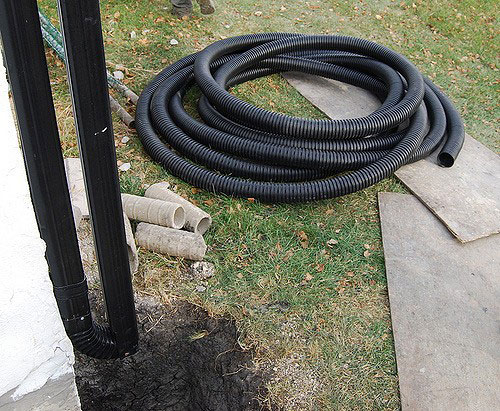
Modern dimple membranes, often made from HDPE with recycled content, create a drainage plane that decouples wet soil from the wall. Paired with a properly wrapped perforated drain at the footing bedded in washed stone, they evacuate water before it can push inward. Look for membranes with Environmental Product Declarations so you can compare apples to apples. I have had good long-term results with membranes that fasten mechanically with low-VOC mastic at seams, sparing heavy solvent adhesives.
Wash stone selection matters. Stone should be clean and angular so it does not pack into fines. Some contractors in London are trialing recycled glass aggregate in drainage layers. It is lighter and drains well, though it needs a competent geotextile to keep it isolated from native soils. Not every site suits it, especially if there is a risk of bearing load transfer, so discuss the choice with your engineer.
Window wells deserve special attention. Install a vertical drain pipe with a sock to prevent silt, connect it to the weeping tile, and cap the well with a clear cover that sheds rain but lets light through. https://devinmvim810.lowescouponn.com/cost-of-french-drains-in-london-ontario-what-to-expect-in-2026 A well that actually drains is more sustainable than replacing a frame and drywall every few years.
For insulation on the exterior, think about the global warming potential of blowing agents. Traditional XPS boards historically used high-GWP gases. Many manufacturers have improved, but expanded polystyrene and graphite-enhanced EPS generally have lower impacts, and mineral wool boards are fully vapor open and made from slag, a recycled industrial byproduct. Pair insulation with a robust protection board so backfill does not shred it.
Interior systems that respect air quality
Sometimes, exterior work is not practical. Urban lots with tight setbacks, a mature tree root field you do not want to sever, or an addition built atop a shallow footing can make interior drainage the smarter path. Eco-friendly basement waterproofing inside follows the same priorities: relieve water, separate it from finishes, and avoid chemical-heavy treatments that off-gas.
An interior perimeter drain installed at the slab edge can collect seepage from floor-wall cold joints and weeping cracks. I favor systems that expose a narrow stone trench and a perforated pipe to the interior so you can see and clean them, rather than hidden channels that nobody can service. Tie the drain to a sealed sump basin with a tight, gasketed lid to keep humidity and radon under control. Use solvent-free adhesives to fasten any cove base or vapor barriers.
Crystalline cementitious coatings can be responsibly used on bare concrete where negative-side moisture is modest. They grow crystals within the capillaries of concrete, which reduces permeability. Because they are mineral based, they are low in VOCs. They are not a cure-all for active leaks under pressure, but they are a useful component in a layered approach. Paint-style acrylic damp proofers often peel within a couple of seasons when used as a lone fix, which leads to more waste.
When we frame new finishes, I avoid paper-faced gypsum right down to the slab. Paper feeds mold. Fiberglass-mat gypsum or magnesium oxide panels hold up better in damp conditions. Mineral wool batts are hydrophobic and maintain R-value if they get temporarily damp. If a client insists on spray foam for wall assemblies, we talk about next-generation HFO-blown foams that drastically reduce the climate impact compared to older HFC formulas, and we detail a proper vapor control layer so the wall can dry toward the interior when it needs to.
Smarter crack repair
Hairline shrinkage cracks often just need to be monitored. The ones that open seasonally or show rusty tie rod weeps call for a fix. Polyurethane injection foams are effective and can be chosen in water-activated, low-VOC formulations. They expand to fill voids and remain flexible. Epoxy injections, while typically stronger, are petroleum heavy and rigid. On walls that move with frost and clay cycles, rigid epoxies can fail at the interface. I keep epoxy in the kit for structural carbon-fiber strap tie-ins on bowed block walls and use the more elastic polyurethane for the routine leak stops. A water-based flush and proper ports reduce solvent use and odors.
For rubble or fieldstone foundations, cementitious parging with a natural hydraulic lime binder remains my go-to. NHL-based mortar breathes, accommodates micro movement, and sticks to the spirit of the original construction without sealing moisture in the wall, which is safer for the stone and healthier for indoor air.
Sumps, pumps, and power with a light touch
A sump system is often the heart of interior basement waterproofing. I specify quiet, efficient pumps sized to the drainage area. Energy draw for a modern 1/3 horsepower unit is usually low, but pumps that short-cycle waste energy and wear out faster. A deeper basin, a vertical float, and a check valve set at a sensible height reduce cycling.
Backup power is where the eco math gets interesting. Water-powered backup pumps use municipal water as the motive force. They keep the basement dry during outages but waste a lot of potable water in the process and can stress the public system during a storm that is already challenging supply. I generally recommend a sealed battery backup with a charger that sips power and a maintenance plan to replace batteries every 5 to 7 years. If you have rooftop solar and an inverter capable of supplying a dedicated circuit, that is ideal but not essential.
Discharge routing needs care. Never send the line to the sanitary sewer. In London, tie it to a splash pad away from the foundation, a buried solid line to a daylight outlet where grade allows, or a dispersal trench on the lawn. Protect outlets with rodent screens and relief ports so a winter freeze does not back up the system.
Landscape fixes that do more with less
A lot of wet basement work masquerades as landscaping. I have solved persistent seepage with nothing more than reshaped soil, a swale to intercept hillside runoff, and a bed of native plants that tolerate wet feet in spring and deep roots in summer. Permeable pavers on long runs of driveway allow infiltration where asphalt would have rushed water into the street. River rock is not a cure, but used as a mulch band under a dripline with a buried solid pipe at its far edge, it works as a mini French drain.
Rain gardens earn their keep here. They slow, spread, and sink rooftop runoff, and they spare your foundation from ponding. Keep them a healthy distance from the house, usually more than three meters, and line the near edge with a compacted clay berm so the system does not bleed back toward the wall. The plant palette can be gorgeous and low maintenance if you choose well. Native sedges and blue flag iris handle the wet cycles, while coneflower and black-eyed Susan carry the show later.
Health, mold, and what to do after a leak
A wet basement in London Ontario often starts as a smell before it becomes a stain. Any persistent moisture above 16 to 20 percent in wood fosters mold. When I am called after a backup or storm, we strip wet carpet immediately, remove the bottom 300 millimeters of drywall if it has wicked water, and run fans with a dehumidifier set to 45 to 50 percent relative humidity until readings normalize. I prefer dehumidifiers that meet Energy Star standards. For stubborn growth on bare concrete or joists, dry ice blasting uses reclaimed CO2 pellets to lift spores and biofilm without harsh biocides. It leaves no secondary waste other than what you vacuum up.
Avoid bleach on porous materials. It is not effective below the surface and adds fumes you do not want in a closed space. If you need a biocide, use one with a clear safety sheet and vent the space.
When structural repair is part of the story
Some wet basements are symptoms of bigger issues. Horizontal cracks with stair-stepping in block, or walls that bow a finger-width out of plumb, call for structural intervention. Eco-friendly does not mean flimsy. In those cases, engineered carbon fiber straps or helical tie-backs restore capacity without a full rebuild. Their embodied carbon is real, but their light footprint compared to replacing a wall is also real. For footing settlement, micro piles or slabjacking with mineral-based grout can stabilize and level without massive excavation. If you reach this point, you are in the territory of foundation repair, and the same sustainability lens applies: target the fix, minimize material, make it last.
Budgets, carbon, and honest trade-offs
Clients ask what the spend looks like. In the London market, a gutter and grading tune-up can land under a few thousand dollars. An interior perimeter drain with a sump often ranges higher, depending on slab thickness, obstructions, and finish removal. Exterior excavation on a single wall with membrane, insulation, and new drainage can move into the five-figure range, especially if access is tight and hand-digging is required. Carbon-wise, excavation and concrete are the heavy hitters. If you can solve the problem with roof water management, a short interior drain, and a targeted crack injection, you often cut both cost and footprint sharply. If you cannot, and exterior work is necessary, choose long-lived details and recycled-content components where they do not compromise performance.
Local context, codes, and being a good neighbor
The Ontario Building Code sets the baseline. Sump discharge must not tie into the sanitary sewer. Backwater valves on sanitary lines protect you from municipal backups and spare the city’s infrastructure. Many Ontario municipalities offer subsidies for backwater valves or disconnection of foundation drains from sanitary lines. Programs change, so check the City of London’s official channels for current offerings before you plan work or budget a rebate into your decision.
Noise, dust, and trucking matter too. If you are excavating, schedule during reasonable hours, manage sediment at the curb, and cover loads. Good site stewardship is part of sustainable practice.
A quick homeowner triage before you call for quotes
- Walk the perimeter during a steady rain and watch where water falls, collects, and flows. Note downspout discharge points and whether they puddle.
- Check grading with a straight board and a level, looking for low spots against the foundation.
- Open the sump lid, confirm the pump cycles cleanly, and trace the discharge line to daylight.
- Shine a light into window wells and test for drainage with a bucket of water.
- Inside, mark wall cracks with a pencil date and width, then watch for growth across a season.
Two short case sketches
A bungalow in Glen Cairn had an intermittent wet corner after summer storms. The owner had called two contractors who pitched full interior systems. We ran a hose test and found the window well filled in six minutes and spilled over the sill. The weeping tile on that side had silted at the corner. We excavated only the failing corner to the footing, replaced two meters of perforated pipe with a geotextile sock, installed a recycled-content dimple membrane up the wall, dropped a new well drain, and extended two downspouts to the back garden where a shallow rain garden now lives. The basement stayed dry through the next season, and we avoided cutting a channel around the entire slab.
A two-story in Old North with a block foundation showed bowing and a history of a wet basement. The client wanted the greenest path that would also let them finish a playroom. We placed carbon fiber straps on a 1.2 meter spacing across the inward bow, injected polyurethane at three active tie rod leaks, and installed an interior drain spur along the most stubborn wall that fed to a sealed sump with a battery backup. We swapped the basement insulation for mineral wool and fiberglass-mat gypsum up to the ceiling. Outside, we regraded and replaced a concrete walk with permeable pavers. The structural correction trimmed risk, the interior drain gave us control, and the landscape work kept roof water where it belongs.
Choosing a contractor with the right mindset
- Ask how they diagnose. If you get a price before anyone looks at your roof water, grading, and sump routing, keep looking.
- Request product sheets for membranes, coatings, and resins. Favor low-VOC, recycled-content, and mineral-based materials where they make sense.
- Discuss containment, dust, and disposal. Responsible firms keep spoil piles tidy, control runoff, and recycle clean concrete and asphalt.
- Clarify serviceability. Drains you cannot access, sumps without lids, or coatings nobody can maintain are not sustainable.
- Seek options, not just one system. A good contractor will offer a ladder of interventions from light to heavy and explain the trade-offs.
How the pieces fit together
Eco-friendly basement waterproofing in London Ontario is a stack of decisions. Start outside, move water off the roof and away from the wall, and shape the ground to cooperate. Diagnose with intent, then choose the lightest intervention that will hold through the pattern of weather and soil you live with. When you need interior systems, build them to be cleanable and quiet. When you need exterior excavation, do it precisely and protect the wall with a clear drainage path and durable materials. If structural issues are present, treat them directly, because a dry but weak wall is not a win.
I have seen basements stay dry for a decade with nothing more than a 6 meter downspout extension, a weekend of regrading, and a sump lid that actually sealed. I have also seen homes along the river that required both exterior and interior systems to tame a seasonally high water table. There is no virtue in underbuilding a fix that will fail, and no wisdom in overbuilding a fix that was never required. Sustainability here is judgment, backed by physics and a careful look at how water wants to move.
If you are wrestling with a wet basement in London Ontario and weighing foundation repair choices, bring that lens to the table. Ask for the path that dries the space, protects your health, and respects the materials and energy invested in your house. Good waterproofing is a craft. Done well, it disappears into the background of everyday life, which is where a healthy home belongs.
Ashworth Drainage — Business Info (NAP)
Name: Ashworth DrainageAddress: 514 Hale St, London, ON N5W 1G8
Phone: (519) 660-9375
Website: https://www.ashworthdrainage.ca/
Email: [email protected]
Hours:
Monday: 9:00 AM – 5:00 PM
Tuesday: 9:00 AM – 5:00 PM
Wednesday: 9:00 AM – 5:00 PM
Thursday: 9:00 AM – 5:00 PM
Friday: 9:00 AM – 5:00 PM
Saturday: Closed
Sunday: Closed
Open-location code (Plus Code): XRR3+HV London, Ontario
Map/listing URL: https://maps.app.goo.gl/9kaoXAxRtJRP1ThS9
Embed iframe:
Socials (canonical https URLs):
Facebook: https://www.facebook.com/ashworthdrainage/
X: https://twitter.com/ashworthrules
Instagram: https://www.instagram.com/ashworthdrainage/
https://www.ashworthdrainage.ca/
Ashworth Drainage provides basement waterproofing and foundation repair services in London, Ontario and surrounding areas in Southwestern Ontario.
The company helps homeowners address wet basements, water intrusion, and drainage issues with solutions that fit the property’s conditions.
Service requests can include foundation repair, waterproofing options, sump pump and drainage-related work, and related assessments.
Ashworth Drainage is based at 514 Hale St, London, ON N5W 1G8.
To reach the team, call (519) 660-9375 or email [email protected].
Business hours are Monday to Friday 9:00 AM–5:00 PM, with the office closed Saturday and Sunday.
For directions and listing details, use the map listing: https://maps.app.goo.gl/9kaoXAxRtJRP1ThS9.
Popular Questions About Ashworth Drainage
What does basement waterproofing help prevent?Basement waterproofing is intended to reduce water intrusion and moisture problems that can lead to dampness, leaks, odors, and damage over time.
How do I know if I may need foundation repair?
Common signs can include visible cracks, water seepage, shifting or uneven areas, or recurring moisture problems; an on-site assessment is usually the best way to confirm causes and options.
What areas does Ashworth Drainage serve?
Ashworth Drainage serves London, Ontario and surrounding areas in Southwestern Ontario.
What are Ashworth Drainage’s hours?
Monday–Friday 9:00 AM–5:00 PM; Saturday closed; Sunday closed.
How can I contact Ashworth Drainage?
Phone: +1-519-660-9375
Email: [email protected]
Website: https://www.ashworthdrainage.ca/
Map: https://maps.app.goo.gl/9kaoXAxRtJRP1ThS9
Facebook: https://www.facebook.com/ashworthdrainage/
X: https://twitter.com/ashworthrules
Instagram: https://www.instagram.com/ashworthdrainage/
Landmarks Near London, ON
1) Kiwanis Park2) Western Fair District
3) Covent Garden Market
4) Victoria Park
5) Budweiser Gardens
6) Museum London
7) Fanshawe Conservation Area